Blog
NebulaDNS: Why Authoritative DNS Is a Game Changer in the AI Era
API-first DNS, observability, and why the AI era needs a new authoritative stack
On this page
Executive summary
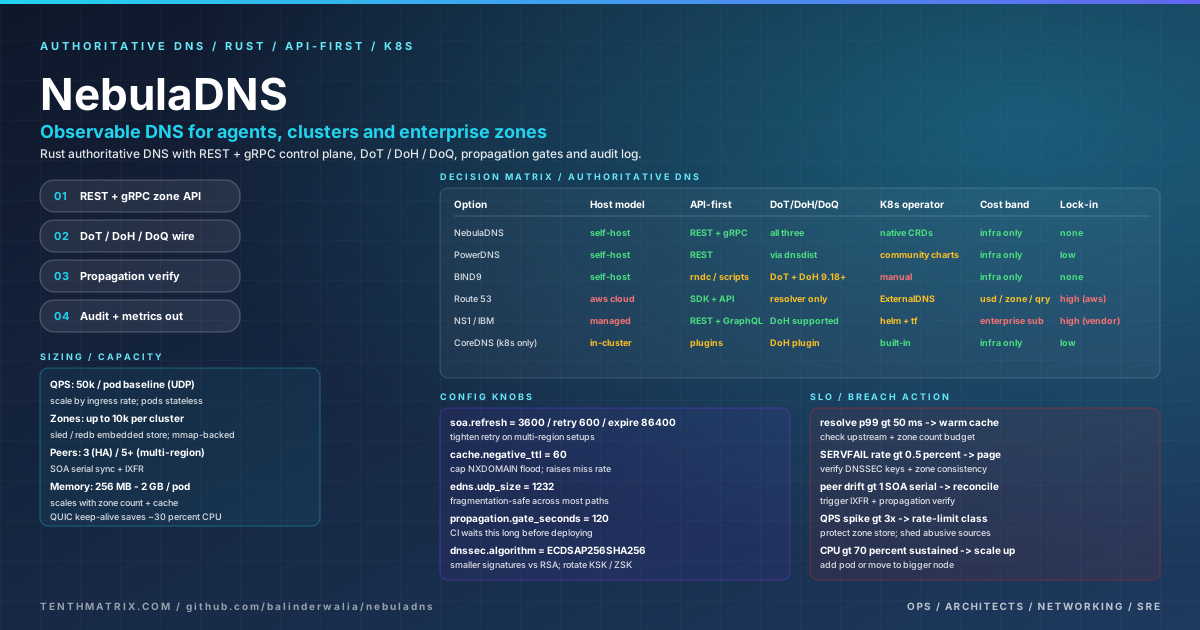
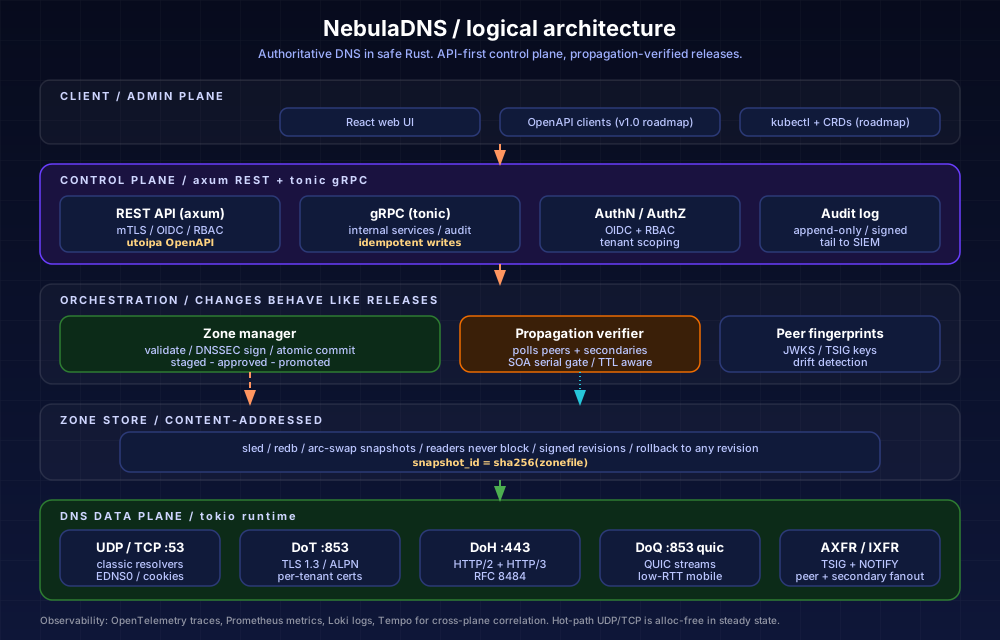
NebulaDNS is a modern, API-first authoritative DNS server written in safe Rust (#![forbid(unsafe_code)]). It targets the operational gaps left by decades-old daemons and opaque C codebases: no metrics, no propagation truth, and no machine-readable control plane. In the AI era, DNS is not “just infrastructure”—it is how agents, inference endpoints, GPU nodes, and multi-cluster services find each other under policy. NebulaDNS treats every zone change as a release: verified secondaries, explicit metrics, and an API for every operator action—aligned with the public narrative on the project site and GitHub repository.
Why DNS matters more when AI is in production
- Service discovery for agents: Stable names for tool endpoints, retrieval services, and policy gateways beat hard-coded IPs across ephemeral clusters.
- Blast radius: A silent AXFR or secondary drift incident (like the real-world interop failures described on the site) can break redundancy long before LLM dashboards notice.
- Compliance and evidence: Audit-friendly DNS with structured logs and metrics supports SOC2-style evidence for who changed which zone and whether it propagated.
What makes NebulaDNS different
The landing page positions NebulaDNS as replacing brittle stacks with one small binary that ships metrics, a control plane, and a path to a Kubernetes operator—so failures surface in seconds, not via customer tickets. Highlights include verified propagation, peer software fingerprinting, atomic versioned configuration, deterministic SOA serials, and Prometheus /metrics with a compile-time cardinality budget.
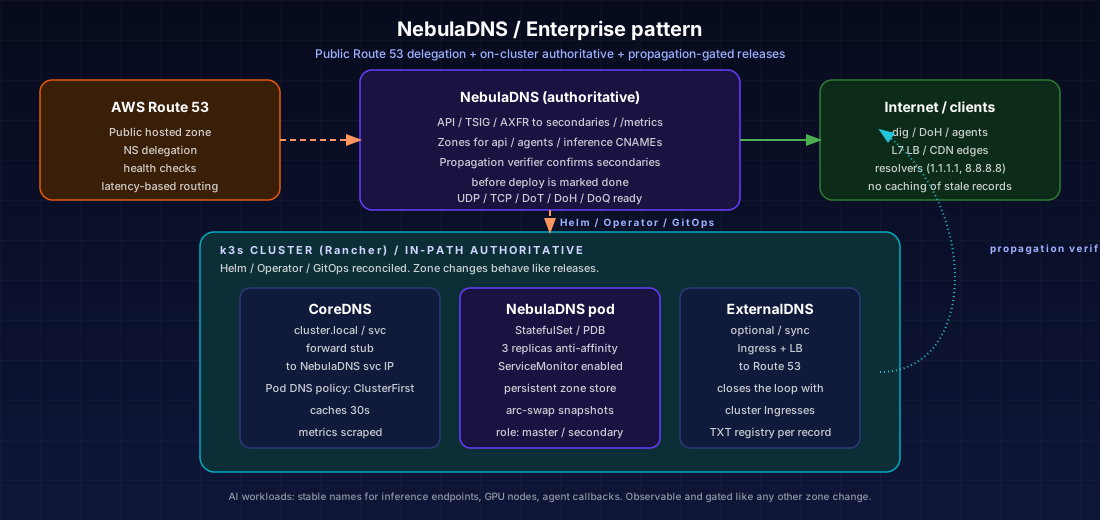
Integration snapshot: Route 53 and k3s
Enterprises often pair AWS Route 53 public zones with on-cluster or dedicated authoritative tiers. NebulaDNS fits as the authoritative source of truth for zones you own end-to-end, with Helm, ServiceMonitor, and operator/CRD storylines on the roadmap described on the site. The diagram below sketches a delegation + cluster pattern (not vendor-specific wiring—adapt to your net-segmentation).
Read next
For the full feature catalogue, metrics examples, and deeper k3s/Route 53 notes, see the companion post NebulaDNS complete feature guide on TenthMatrix.
How TenthMatrix can help
TenthMatrix designs platform engineering and SRE-ready DNS patterns—GitOps, observability, and safe cutovers—for cloud and edge. Contact info@tenthmatrix.com for architecture reviews or delivery support.
More from the blog
Observability Is Not Optional: Make It a Business Standard
Why fragmented monitoring creates blind spots, duplicate spend, and slow incidents — and how to make centralised observability a non-negotiable company standard.
WSL Vault for Compliance: One Tenant Never Opens Another’s Secrets
How WSL Vault keeps app, team, and environment tenants cryptographically isolated — so a stolen root-style token cannot empty the estate — and why dual-tenant control beats secrets sprawl.
Workstation AI Shop: Promoting the AI Sales Storefront Through int → test → acc → prod
Workstation AI Shop sells GPU machines with a fully autonomous AI Sales Agent that configures the basket. See how Ring Promoter moves each build through int → test → acc → prod — with Orbit screenshots release engineers and stakeholders share.